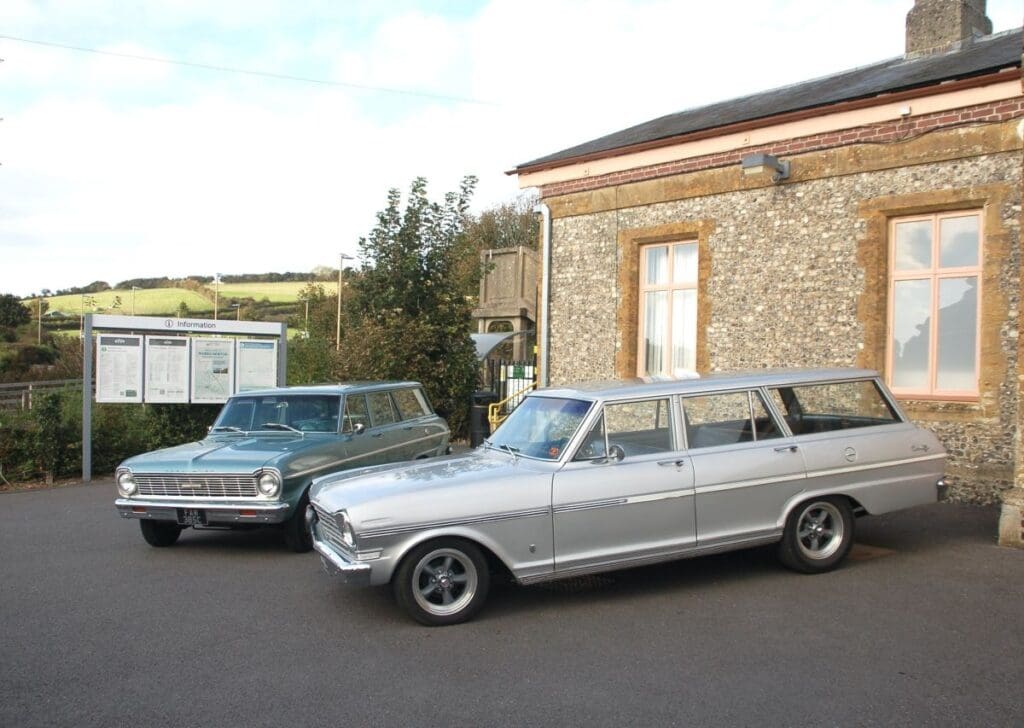
We take a trip south-west to get together two rare Chevy station wagons of the ’60s – a pair of workhorses with a few secrets hidden beneath
Words & Photos: Keith Harman
Estate cars, station wagons, shooting brakes… whatever you choose to call them, ‘longroofs’ have become an increasingly popular classic choice in recent years – and it’s easy to see why. As highly practical alternatives to two- and four-door sedans, they offer the same classic looks, similar comfort and performance options, as well as the added versatility of being family haulers, business vehicles, race support cars, plus a multitude of potential other uses.
Enjoy more Classic American Magazine reading every month.
Click here to subscribe & save.
The compact Chevy II series was introduced in 1962 as GM’s answer to Ford’s Falcon range, and was available in five different body styles comprising two- and four-door sedans, a two-door hardtop, a convertible and a four-door wagon. Only two options of powerplant were available – a 2.5-litre four-cylinder and GM’s 194cu.in (3.2-litre) straight-six, later increased to a 230cu.in (3.8-litre) in 1964. GM’s rationale for the Chevy II was that it should be a basic, no-frills, economical and affordable car, and to this end the company succeeded. The convertible and hardtop then added extra flair to the range under the additional Nova badge, which appeared across all of the top-of-the-range Chevy II derivatives.
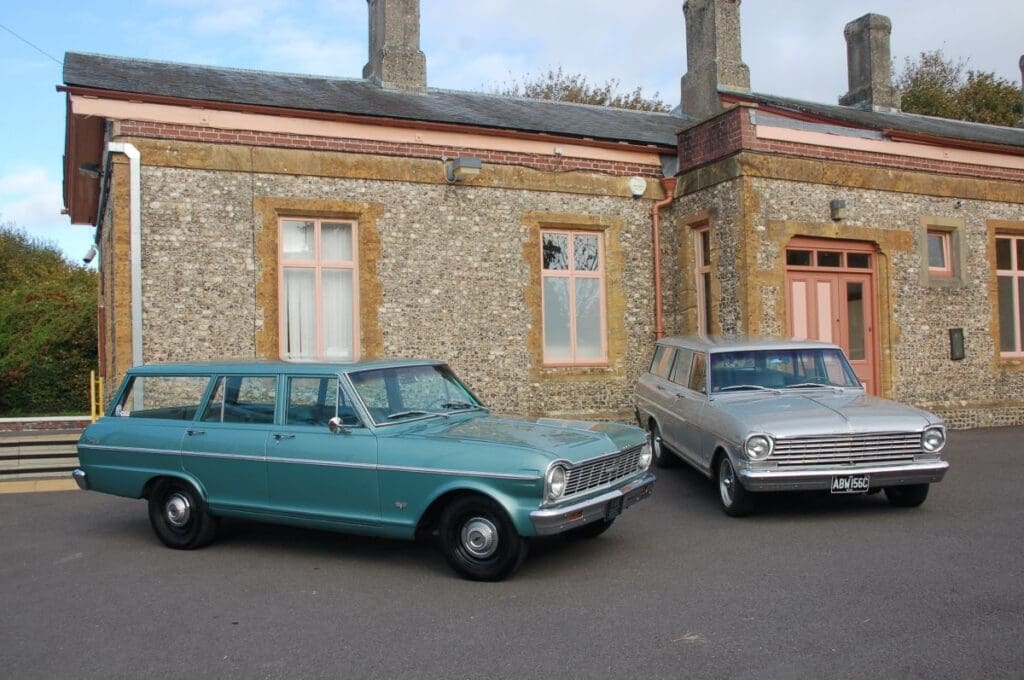
With a wide factory line-up and modest engine options, it’s surprising that the cars were never officially made available in the UK, though they were assembled at European assembly plants in both Belgium and Switzerland, so maybe a few made it over via GM concessionaires back in the day. As far as wagons go, we’re informed that there are probably just five examples in the whole country, so it’s quite remarkable that we found the two you see here both located in the south-west, just 15 miles apart from each other in the South Somerset/West Dorset area. And as they’re both station wagons, it seemed appropriate that we’d choose a railway station car park for the photo shoot.
EARLIER CAR
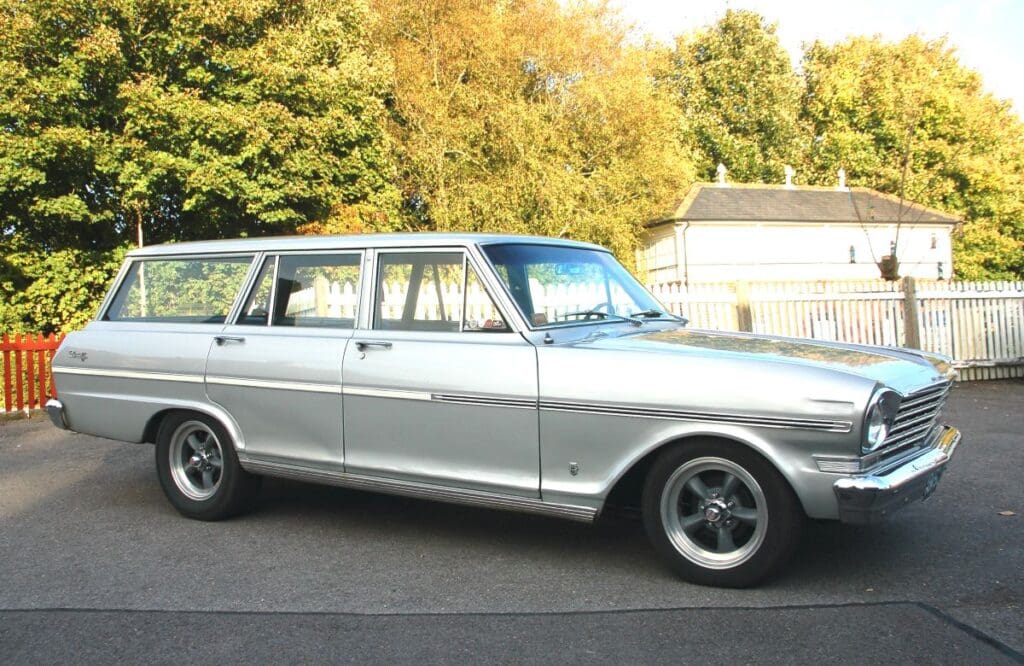
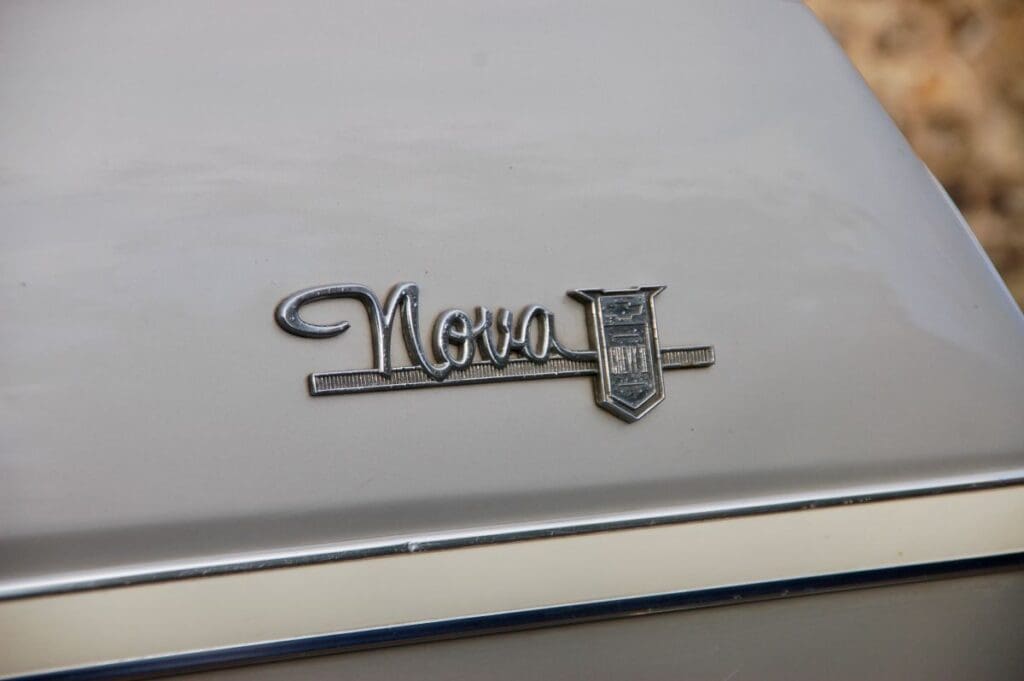
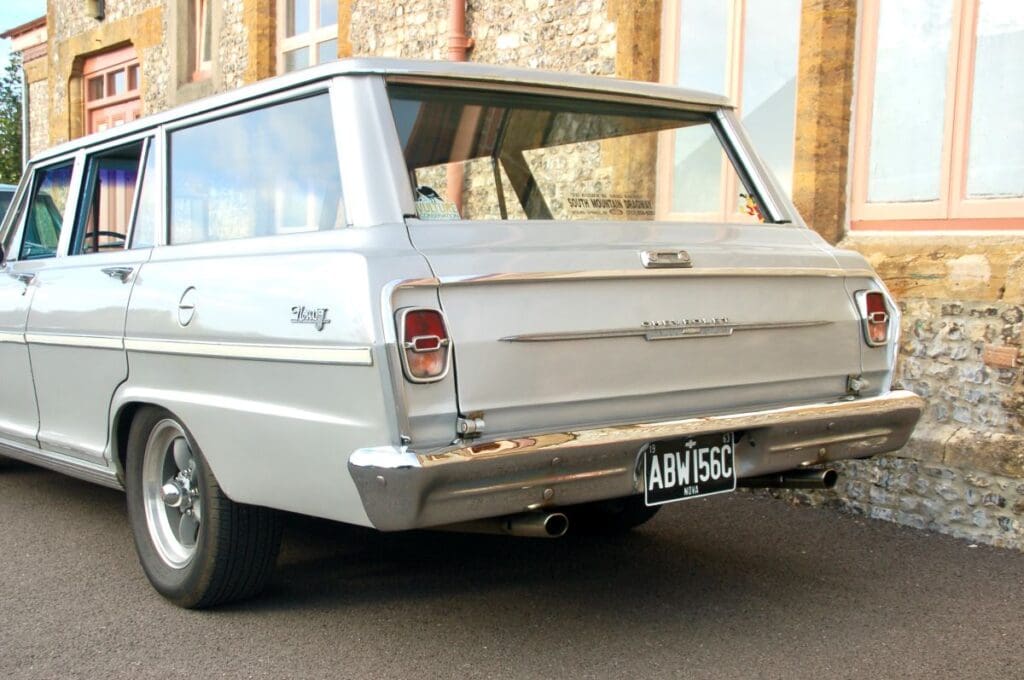
Taking them in the chronological order in which they left the factory, let’s start with Tim O’Regan’s silver 1963 example. Badged as a Nova, it features a slightly higher spec than a regular Chevy II wagon, but only in the modest additions of having a padded dash top, some extra brightwork and an electric tailgate window, that last feature being a tad odd as all the door windows are manual.
Nevertheless, the wagon that Tim – now a semi-retired teacher – has owned for the last decade has an interesting and very well-documented history. Tim’s own well-documented history, meanwhile, includes several cool American vehicles, such as a ’66 C10 pick-up, a ’65 Galaxie, a ’72 Impala and a ’72 Dart.
The extensive history that came with the Nova wagon reveals that it was bought new in March 1963 by one Gordon Reynard, a Brit who was living and working in Stamford, Connecticut, at the time. After a couple of years in the USA, Gordon returned to the UK, bringing the Chevy with him to his home in Littlehampton, West Sussex, and registering it on a five-digit C-registration plate that must have subsequently been sold as a desirable cherished number. Gordon was presumably quite smitten with his Chevy as he kept it for the rest of his life, eventually taking it off the road for mechanical restoration work after 30 years’ use, plus a respray in the car’s original silver. Remarkably, the blue factory interior has lasted extremely well and remains all-original.
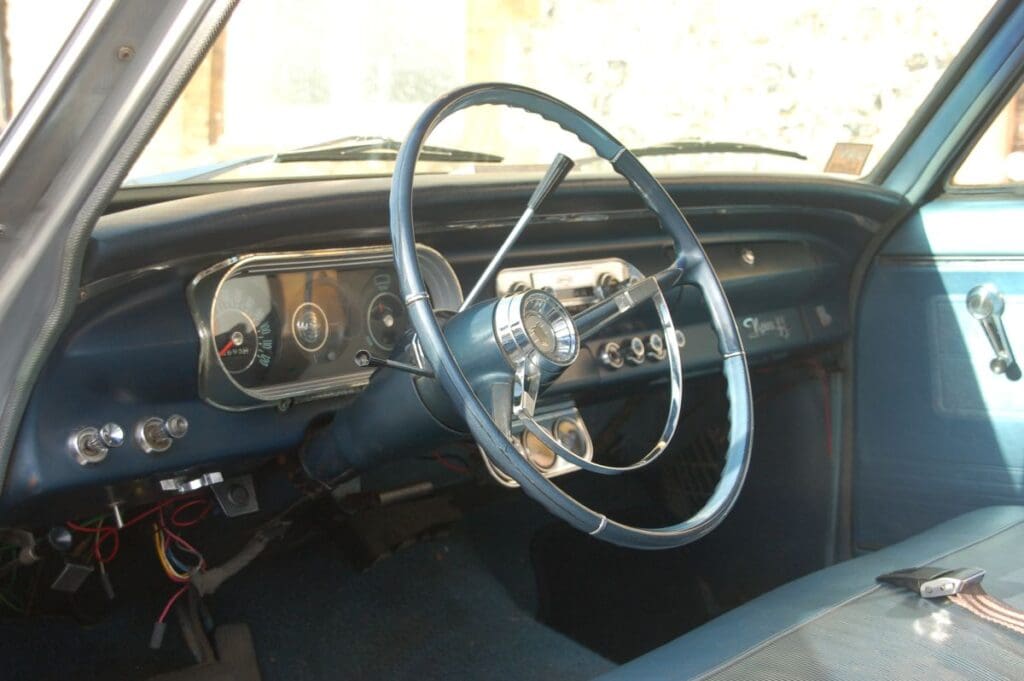
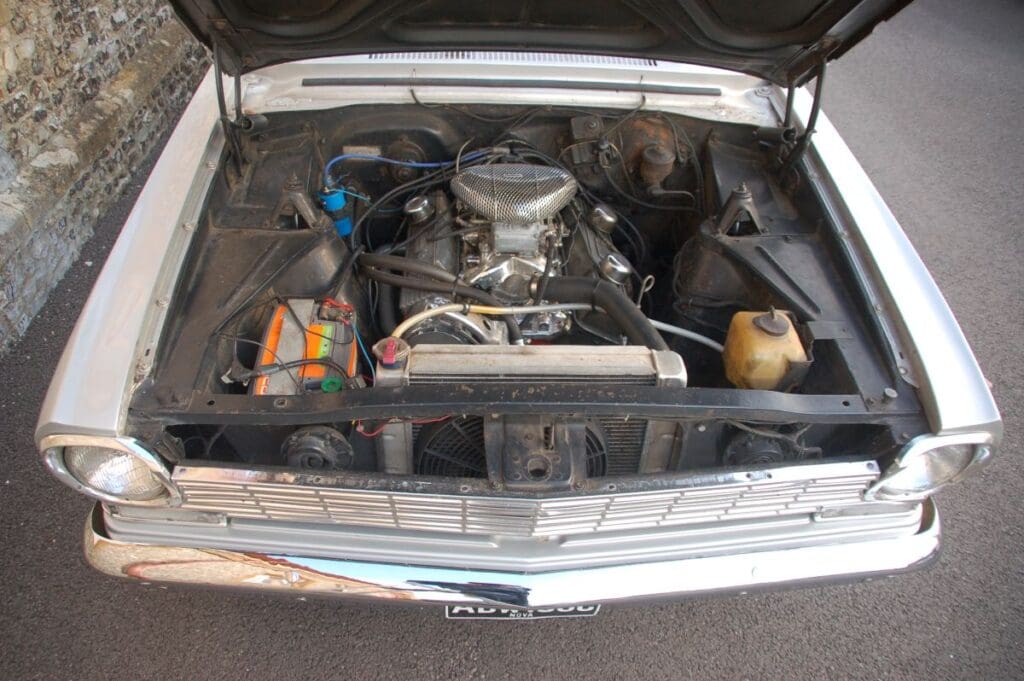
We don’t know when Gordon eventually passed away, but the Chevy would have been sold as part of his estate, and was next owned by Robin ‘Budge’ Deacon, from whom Tim bought it. While in Budge’s ownership, in around 2008, the car was booked in to Buckland Automotive to have the (by then probably tired) 194cu.in six replaced by a 350cu.in small-block. (GM finally added a V8 to the Chevy II range in 1964 in the form of a 195bhp 283cu.in, but transplants by enthusiasts had already become common practice.) As far as Tim knows, the engine is internally stock but has the standard SBC upgrades of an alloy intake manifold, a 600 four-barrel Holley carb and a set of headers. The transmission is a GM two-speed Powerglide that, contrary to some popular opinion, Tim finds perfectly agreeable in use.
You’ll notice from our photos that the car has a lower stance than stock, with the rear having just single leaf springs probably accounting for this (Tim guesses that a leaf or two may have been removed), although the ride is compensated for by a set of air shocks. Tim also suspects that the car may well have a set of dropped spindles at the front, though the brakes and steering are otherwise all stock, apart from the original power steering system having been removed (probably when the engine swap was carried out).
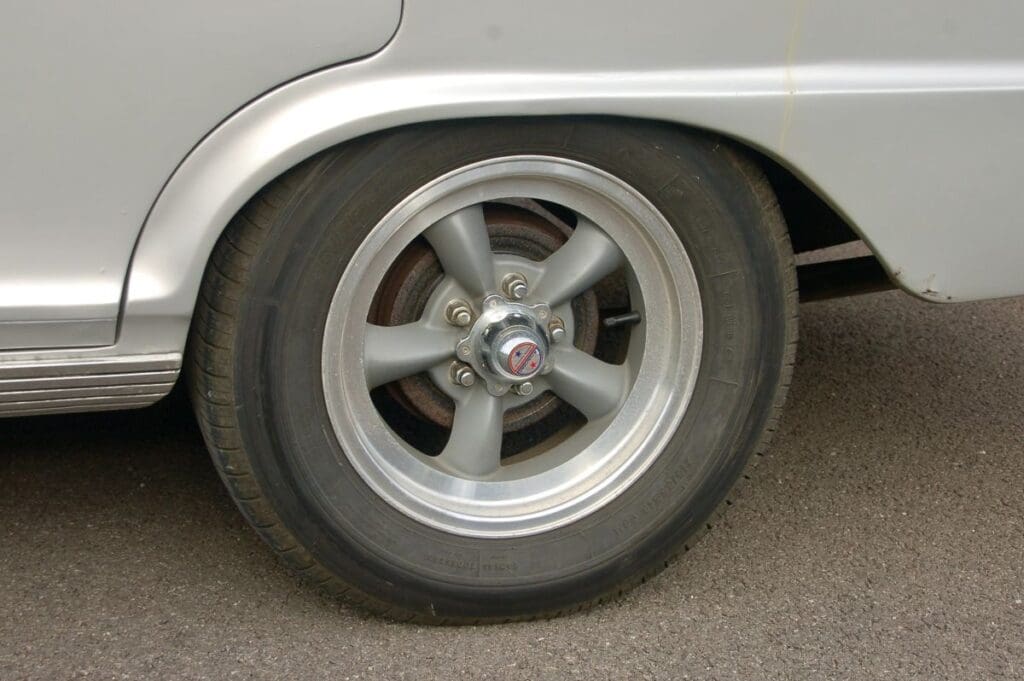
In 10 years of Tim’s ownership, the only major change to the Chevy has been a wheel swap, with the previous polished Centreline rims giving way to the 15×7 American Racing Equipment five-spokes that fit the period of the car – and Tim’s tastes – better. During the summer months, the wagon serves as Tim’s regular transport, especially at weekends, both on family trips to the coast and to car shows and events.
LATER SIBLING
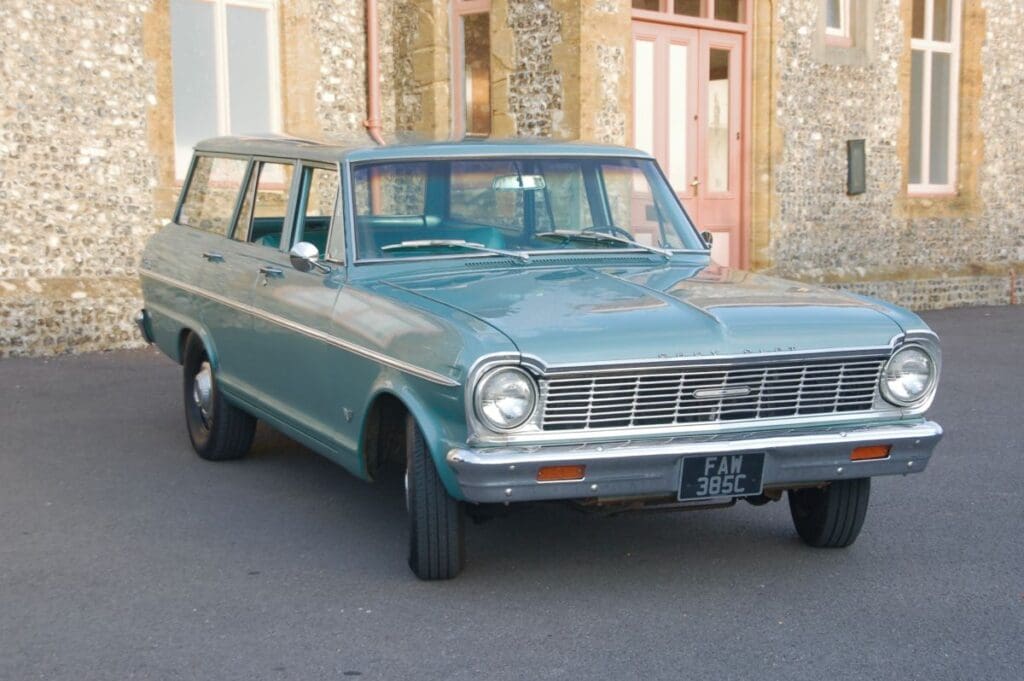
While Tim’s wagon gives hints to its modified status via its stance and wheel/tyre combo, Beavis Allen’s 1965 model appears completely stock in appearance. However, those who know Beavis well will be aware of his background and involvement in the UK drag racing scene – and will also know he’d never be satisfied with the factory Chevy II spec, whether it be powered by a four or a six. If you’ve spent any time at a drag strip in recent years, you’ll have noticed Beavis’ other Chevy, a bright red ’59 Impala that regularly runs 10-second quarters. Originally his ‘street’ car for weekends and shows, the increasing need for speed culminated in a blown big-block Chevy motor in the ’59… and although it’s still street legal, it’s not exactly a car to put the miles on.
Soon after retiring from the aviation industry in his home town of Yeovil, Beavis was able to acquire the ’65 from a buddy not far away in Bristol, called Dave Shoemark. Dave had imported the wagon back in 2002 after finding it at a swap meet in Portland, Oregon, and having just bought a dragster for the upcoming season, he called Beavis to let him know the Chevy was up for grabs, knowing he’d previously admired it. Beavis snapped it up as an ideal addition to his garage while the ’59 was off the road being upgraded, with the added appeal that the wagon was in the same GM Turquoise Green as his first American car – a ’66 Impala wagon.
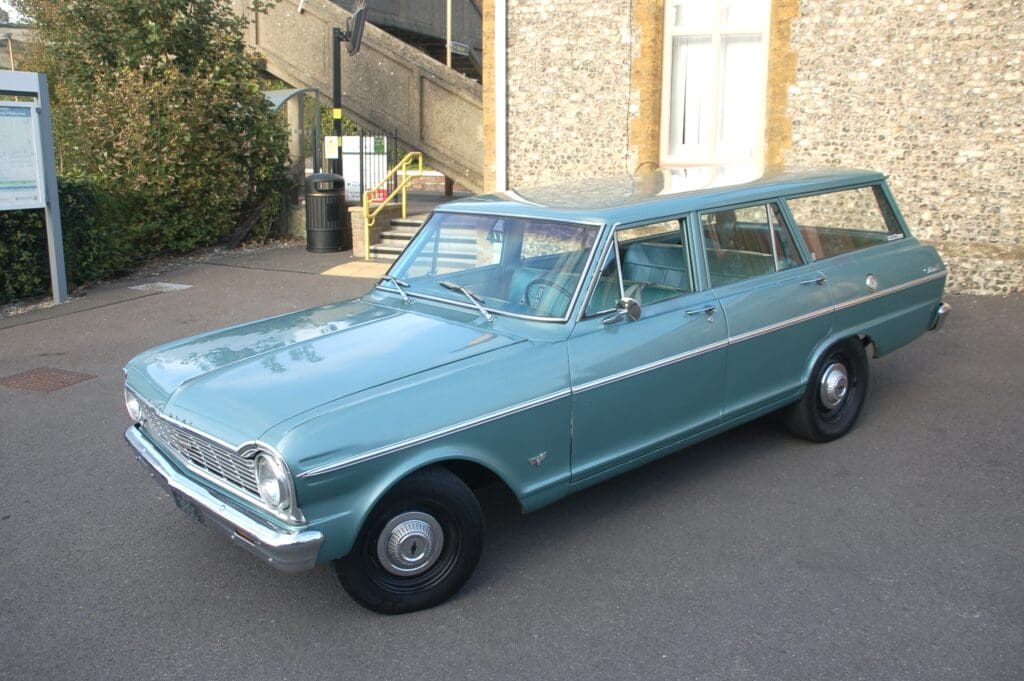
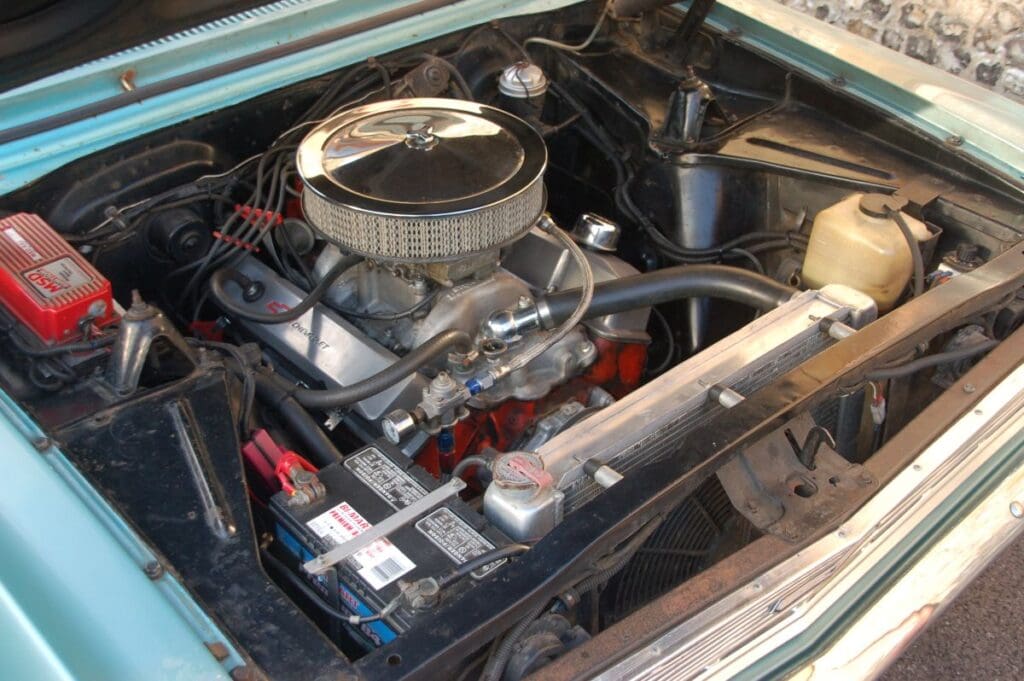
Although we referred to the ’65 as having a very original external appearance, it’s a different story beneath the panelwork, although most of the upgrades – including the 283cu.in small-block – were fitted in the States prior to import. Beavis is pretty sure it has an aftermarket cam in it, but otherwise thinks the motor is stock internally. Proving that upgrading Chevy’s V8 is very much a proven formula, like Tim’s car, it too runs an alloy inlet, a Street Dominator, and a Holley 600 four-barrel carb that Beavis added himself. Both cars benefit from an aluminium radiator and an electric fan, and unsurprisingly both run a twin exhaust – Tim’s including headers and Flowmaster mufflers, while Beavis’ car has headers and a three-inch system.
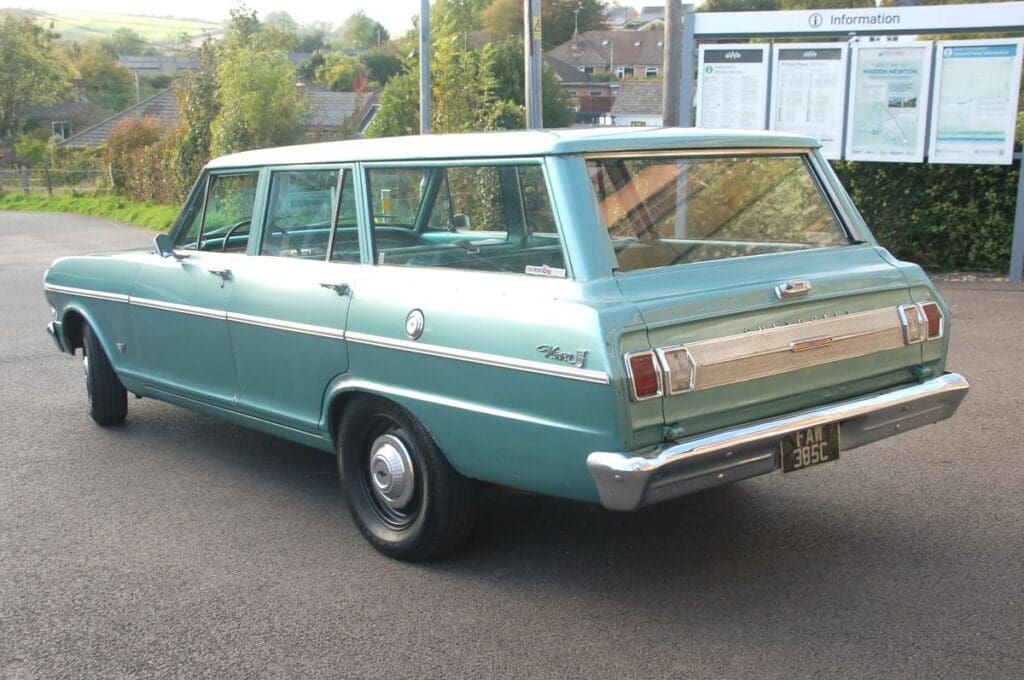
We already mentioned Tim’s Powerglide transmission, and if Beavis’ ’65 once had a similar one mated to the original six-cylinder, it’s long gone now, replaced by a floor-shift Borg Warner T10 four-speed and a Hurst shifter. The stock Chevy II rear axle has also been replaced by a 10-bolt Camaro unit, the rest of the rear suspension remaining all stock, resulting in the car’s original ride height. Like Tim, Beavis also swapped the wheels and tyres on his wagon, opting to go for plain steels and original hubcaps to complete the ‘street sleeper’ look. It’s not obvious, but the rear rims are actually 15s shod with 215-70 tyres instead of the stock 14s, as fitted to the front. All this results in a very well-mannered and reliable car that’s perfect for daily use, while at the same time being capable of running a respectable 15.5-second pass on the strip at 92mph.
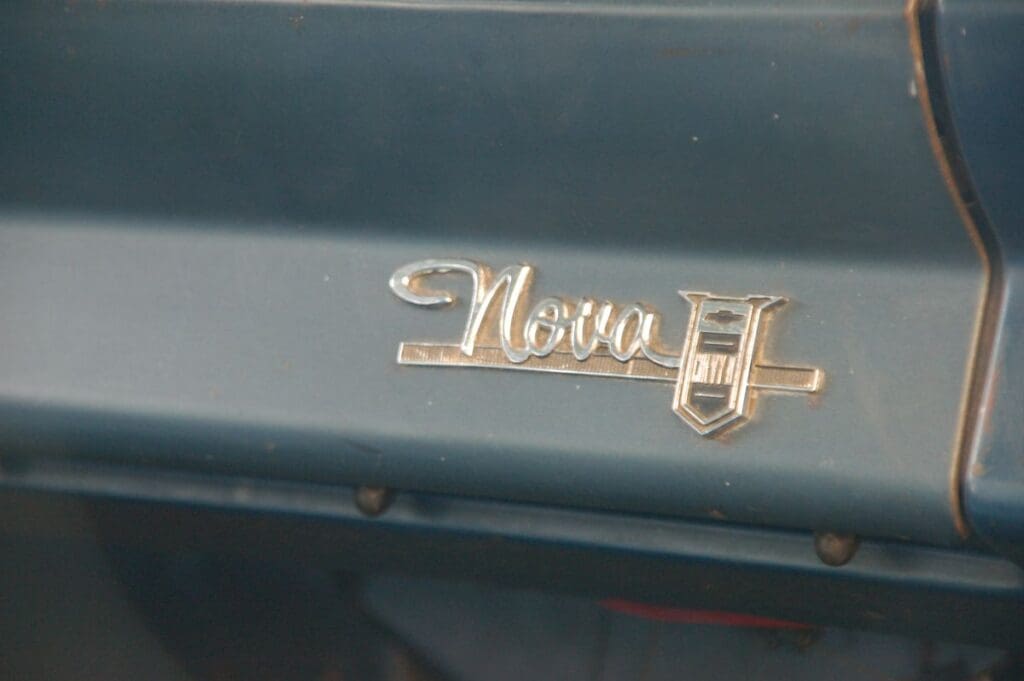
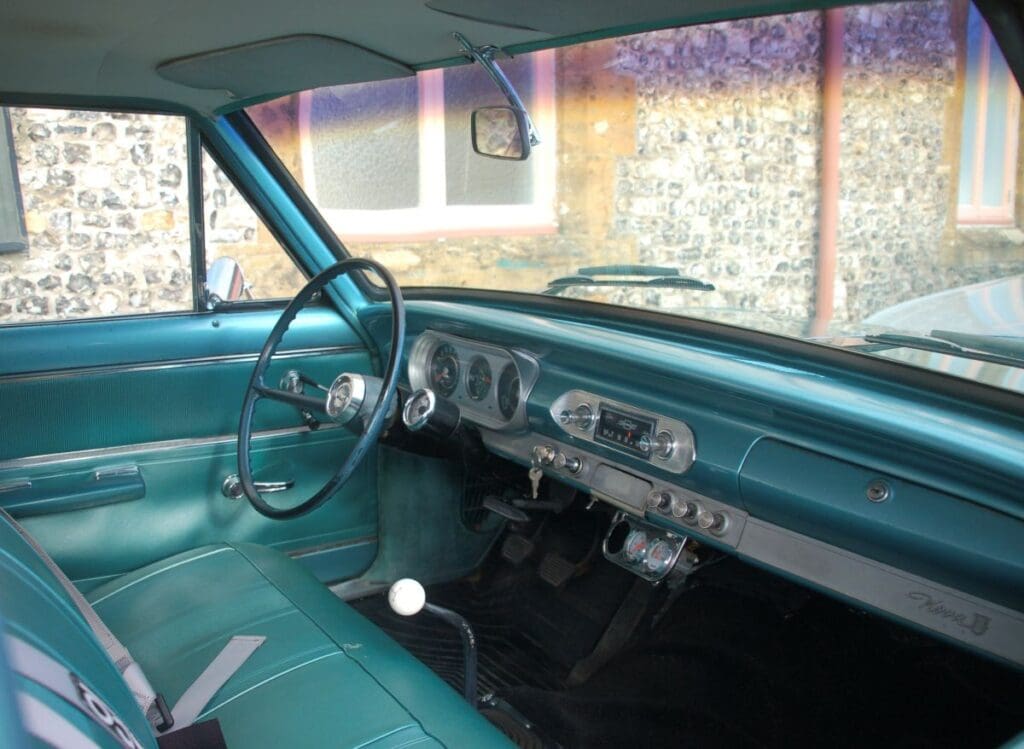
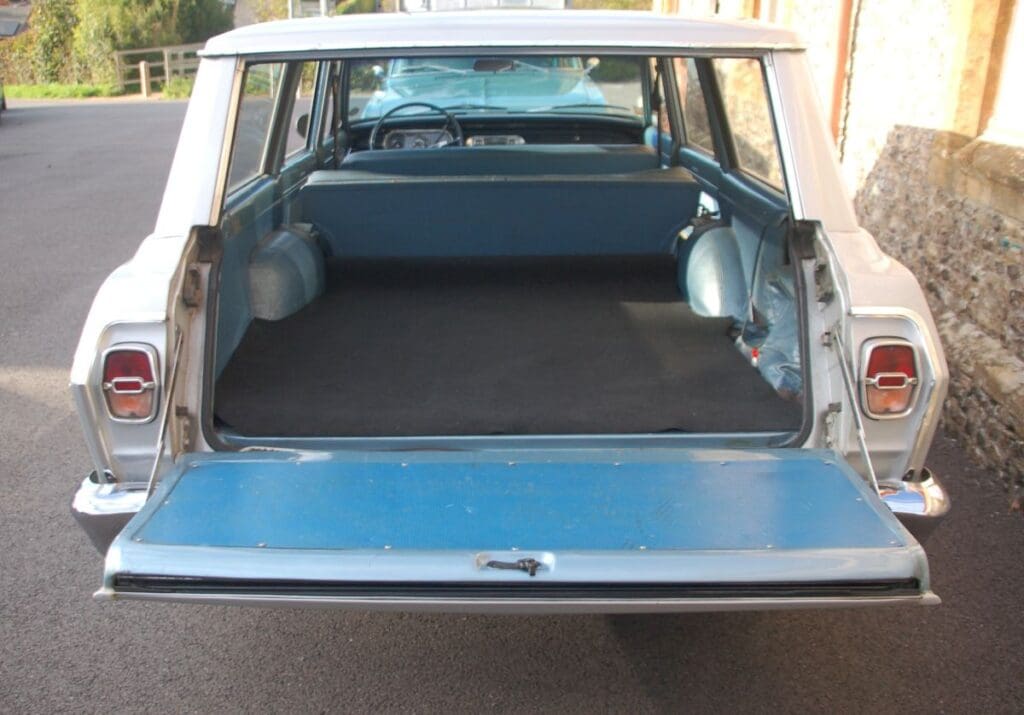
Having both cars together for our shoot gave each owner (and us) a chance to compare the subtle differences between the ’63 and the ’65, none of which are immediately that obvious except for the front sidelight positioning; while Tim’s car has clear lenses under the headlamps and a small finisher trim on the front of the fender, by ’65 the lamps were set into the bumper with amber lenses. There is also a slight design difference in the grille, and the forward tip of the beltline side moulding is pointed on the later car and squared off on the ’63. More obvious is the rear and tailgate treatment, the ’63 having single tail lamps either side of the tailgate and thin mouldings framing the tailgate reveal, while the ’65 has the reverse lights mounted on a full-width brushed alloy trim.
Finally comes the question of the Nova badging. Originally, as mentioned earlier, the Nova name was only seen on top-of-the-range Chevy IIs, though Beavis’ ’65 has Nova badging on the rear fenders and glovebox, even though it lacks the electric tailgate window, the rocker panel (sill) trims, and the padded dash top as seen on Tim’s ’63.
Whatever your personal preference in terms of styling details, there’s no doubt that this is a fine pair of West Country wagons – and a welcome sight for any marque fan. We just love the clean styling of these mid-size Chevys – cars that started out as mere ‘grocery getters’ but 50-odd years later are now stylish, uprated and highly entertaining examples of mid-century automotive Americana.