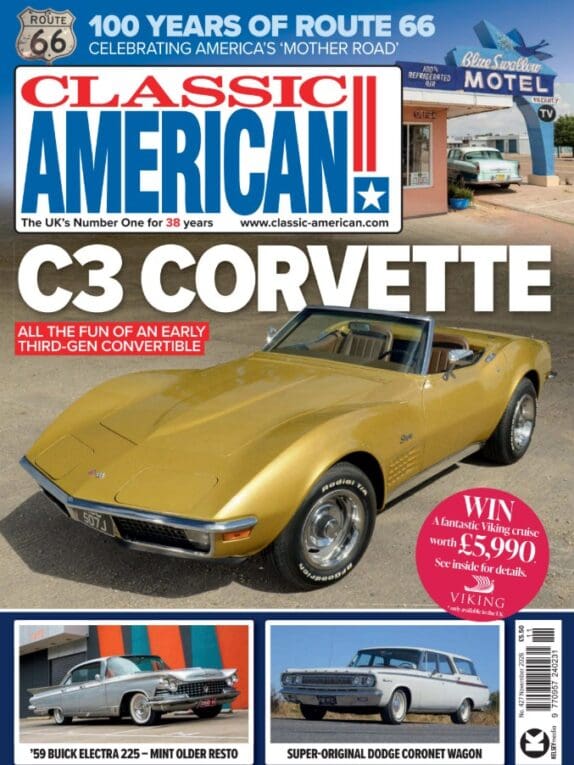
Towering dinosaur statues, quirky motels, and unforgettable roadside landmarks capture the spirit of America’s great road trip era, when the journey was just as exciting as the destination.
The Great Road Trip Era ran from 1945 to 1973, when American family vacations were at an all-time high. This boom started when cars became ordinary, and roads got numbers. Its end came when the interstates bypassed the towns, meaning travellers could now rush to their destinations at maximum speed, permanently leaving the quirky, roadside culture, which included roadside attractions. Here are six of the top roadside attractions that best tell on this adventurous era.
Wall Drug, South Dakota (1931)
In 1931, Ted and Dorothy Hustead bought the drugstore in the town of Wall, South Dakota. After five years struggling to stay afloat, one day Dorothy noticed drivers heading over to Mount Rushmore drove in the heat and were thirsty. So she started giving free ice water, advertised by a series of road signs.
Enjoy more Classic American Magazine reading every month.
Click here to subscribe & save.
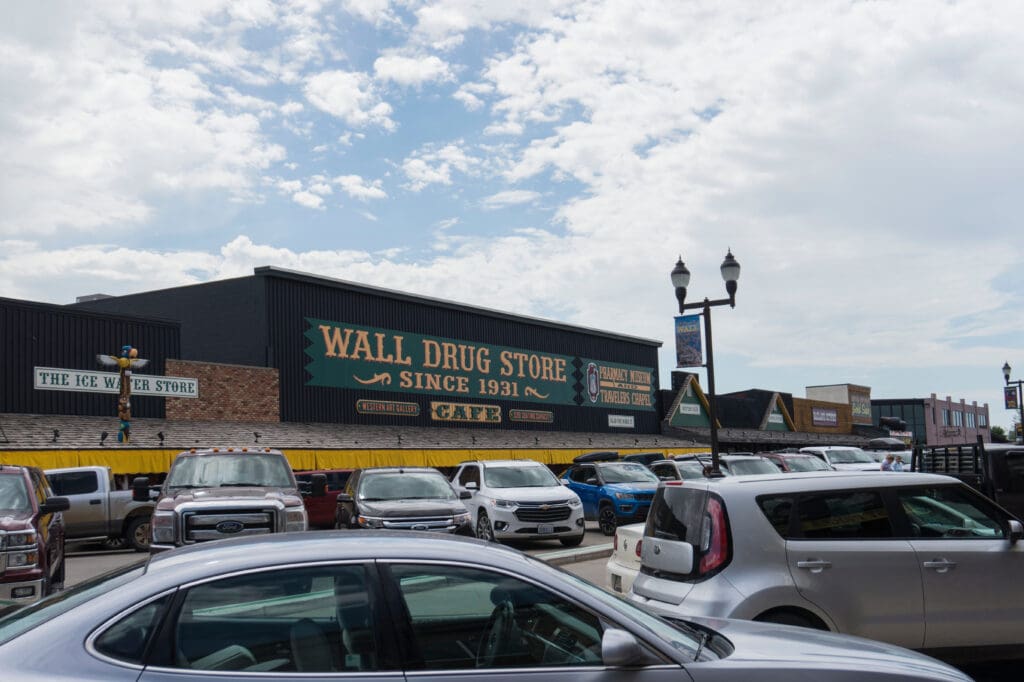
It worked: the signs pulled people in from the day they were posted at the store. This trend went on, and before long, they had about 280 road signs before the 1960s curbs. Today, even after the road trip era is gone, Wall Drug remains open, selling five-cent coffee, and still giving out free ice water in a restaurant with an over 500-person seating capacity.
Wigwam Motel, Holbrook, Arizona (1950)
The Wigwam Motel was opened on 1 June 1950 on Route 66, as Wigwam Village No. 6. Chester Lewis opened the club after seeing Frank Redford’s village in Cave City, Kentucky. Unlike most brick and motor motels, Lewis built rooms in the shape of tepees. The motel instantly became novelty architecture on the highway, and doubled down as a sales pitch that worked.
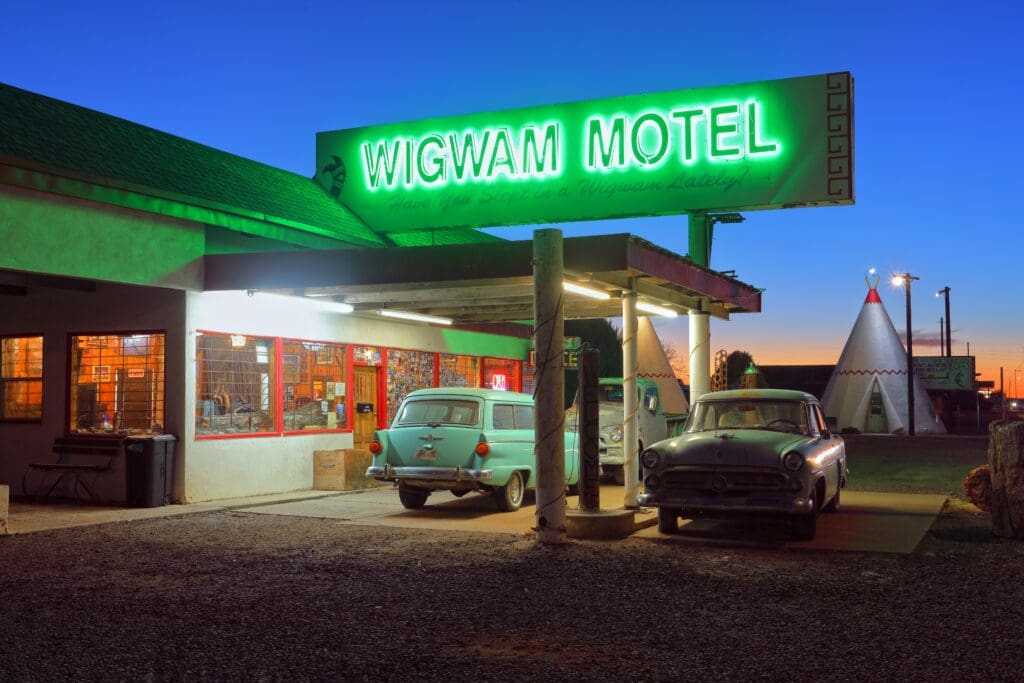
This family-run motel remains open. Featuring 15 freestanding concrete-and-steel tepee cabins furnished with original restored hickory pieces, the property was added to the National Register of Historic Places on May 2, 2002. This spot fully preserves a legendary slice of roadside culture.
South of the Border, South Carolina (1949–50)
Alan Schafer founded a beer stand on the North/South Carolina line around 1949, captalizing on selling beer to customers from the dry North Carolina counties. Its name came from building materials labels marked “Schafer project: south of the border,” to refer to the construction site location just south of the state line.
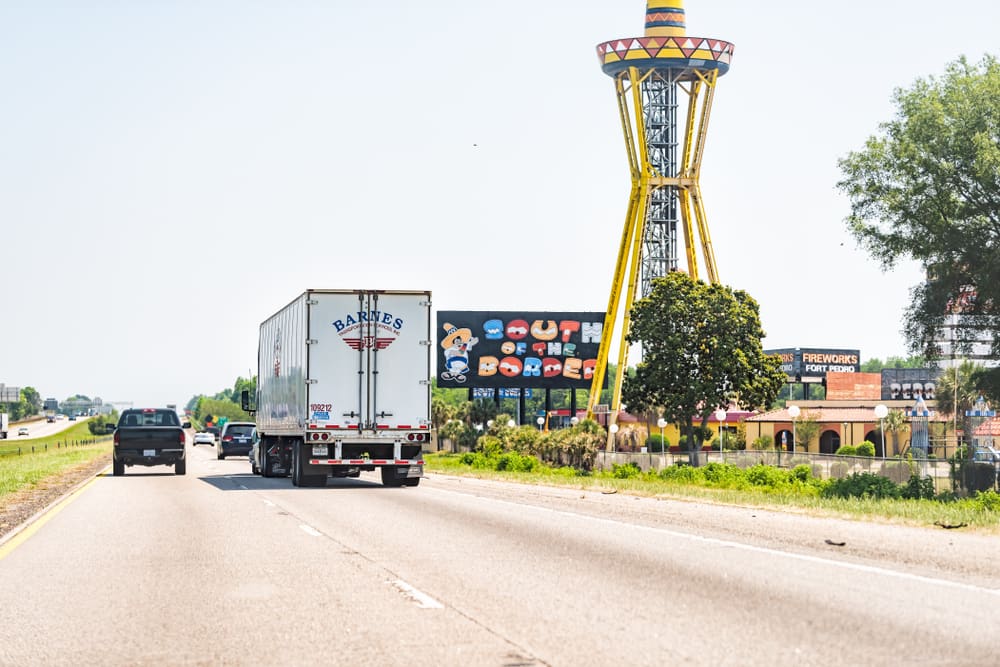
Post-war families heading to or from Florida made a stop here to view a 97-foot Pedro sign and a Sombrero Tower on 165 to 200 feet. This showed that people turned rest stops into destinations marked by themes and signage. In August 2026, the Mexican Embassy complained about stereotypes, and management changed it. The place remains open.
Cabazon Dinosaurs, California (1964)
The Cabazon Dinosaurs were constructed beside Interstate 10 by Claude Bell, a former Knott’s Berry Farm sculptor. Bell wanted to draw diners to his Wheel Inn Restaurant, which opened in 1958. To do that, he built two dinosaurs: Dinny, the 45-feet-high and 150-feet-long one that took 11 years, then Mr. Rex followed in 1981-86, at 65 feet and 100 tons.
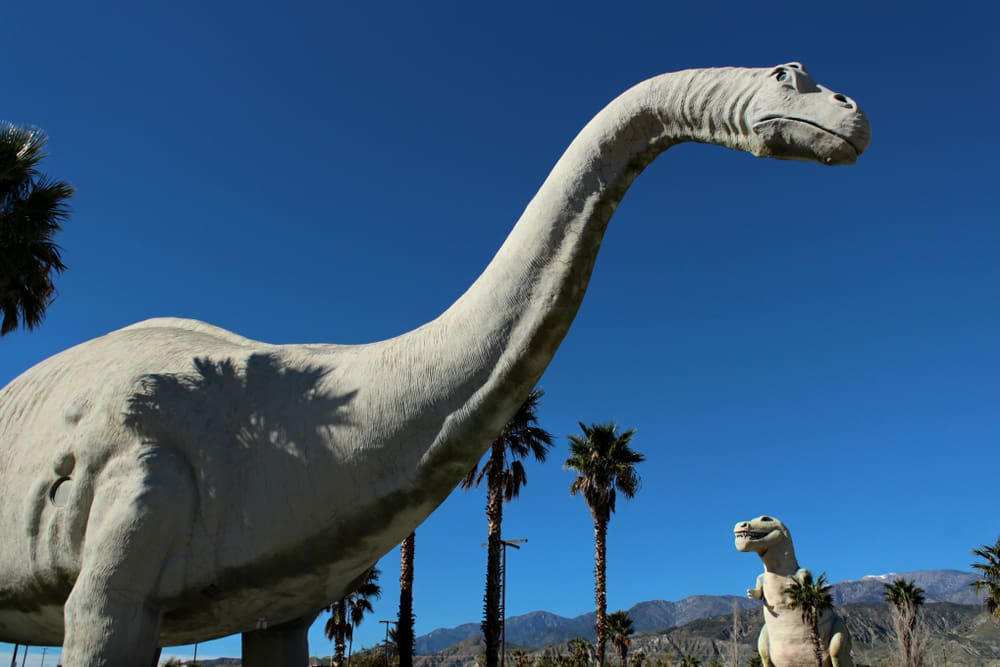
This roadside attraction turned a roadside restaurant into a lucrative business by using a building as an advertisement. Eventually, new ownership converted the site into a creationist museum beginning in 2005. Currently, both statues still stand tall beside the busy interstate.
Blue Whale of Catoosa, Oklahoma (1972)
The Blue Whale of Catoosa was revealed on 7 September 1972 on Route 66 on the Davises’ 34th wedding anniversary. Huge David, a Tulsa Zoo zoologist, hired welder Harold Thomas to build this structure as a gift to his wife Zelta, who had a hobby of collecting whale figurines. After completion, it stood 20 feet tall and 80 feet long.
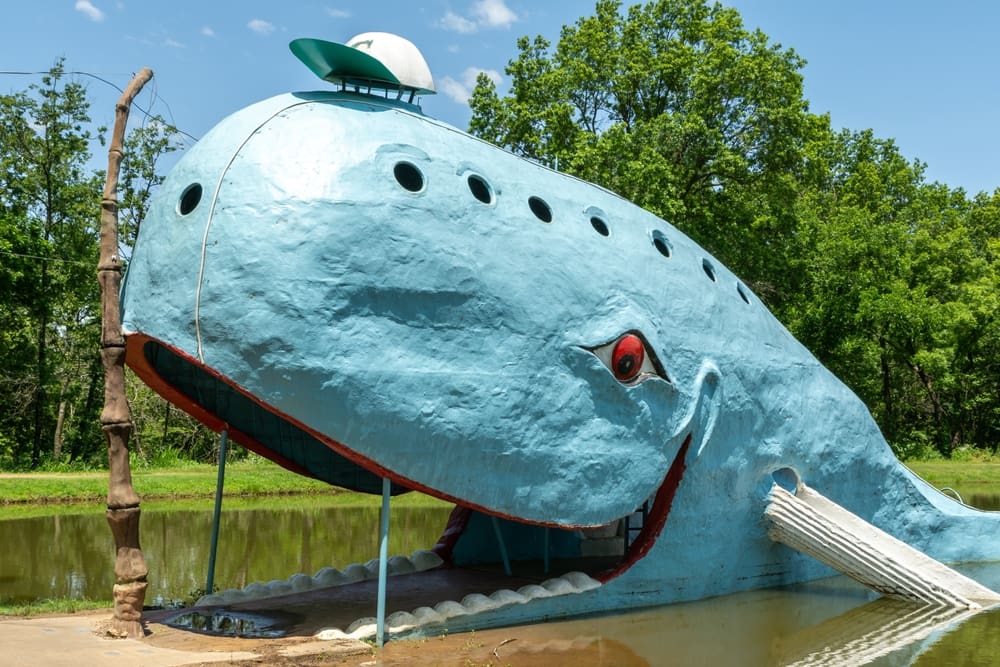
Because he wanted to make it child-friendly, he added slides since children often swam in the pond nearby. Within no time, the spot became the go-to swimming spot for both locals and travellers. This road attraction is a show of how a simple hobby could inspire something unique, something the era supported.
Cadillac Ranch, Texas (1974)
Completed on 21 June 1974 in a wheat field outside Amarillo, Cadillac Ranch was owned by an Art collective consisting of Chip Lord, Hudson Marquez, and Dough Michels, with patron Stanley. This roadside attraction is a work of art because ten Cadillacs, from a 1940 Club Coupe through a 1963 sedan, are buried nose-first.
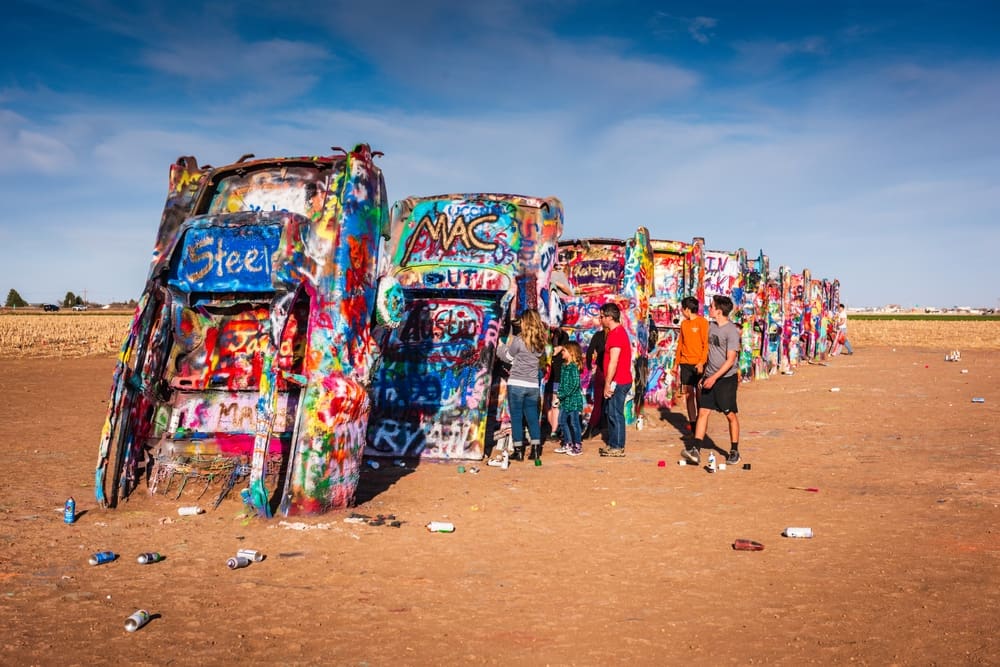
The group wanted public art that would shock locals, and they did. Later, the site was moved by a mile or two as the city spread, but it still survives to this day. Today, it is free to visit, with spray paint sold nearby to anyone who would love to add some graffiti.